
Inner Peace and Meaning
This is a political site, but we're all human and most of us have a religious and/or spiritual side that informs our values and our politics. Let's talk about it!
[If viewing on your phone, enable Auto-rotate]
People who practice Christianity, Islam, Hinduism, Judaism, Jainism, or any other religion – or no religion at all – are fine with me. You be you. There’s one exception I have, among some self-identifying Christians, which I’ll get to in a minute. Here’s my journey, from Catholicism to Buddhism.
CATHOLICISM
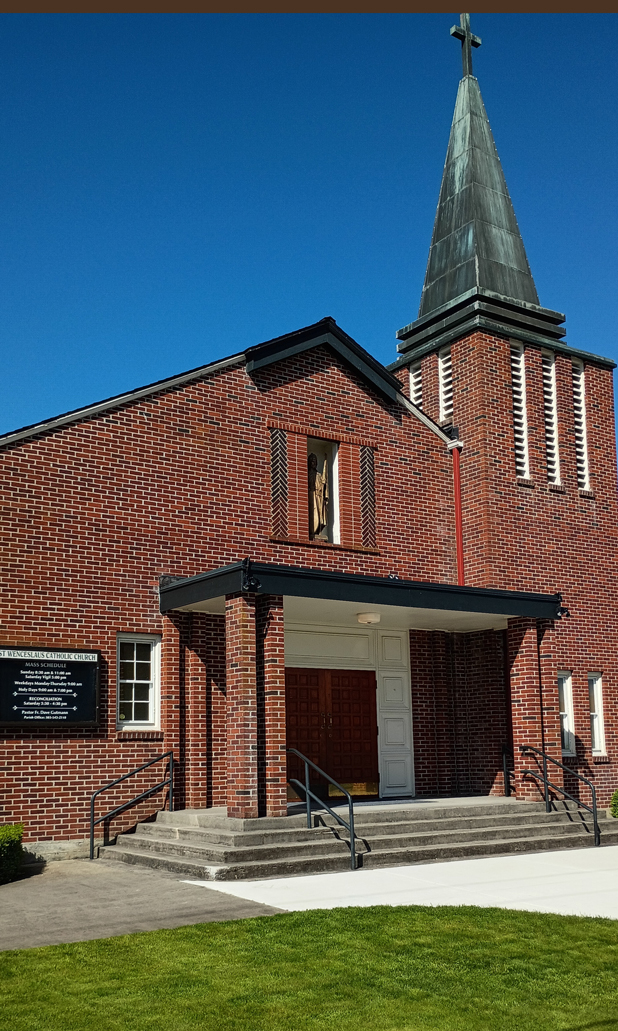
I was raised as a Roman Catholic and received the Baptism, Communion, Confession, and Confirmation sacraments. I was an altar boy for a couple of years and enjoyed Mass more doing so. I chose Thomas as my confirmation name, which was redundant but reflected that even at 14 I identified with Doubting Thomas. I soon became a lapsed Catholic.
In 2005 I read “Catholicism for Dummies,” written by two Jesuit priests. It has the Nihil Obstat and Impratur declarations, certifying that it is free of doctrinal or moral error. It was a pleasantly written and informative book that I was happy to read and made a lot more sense to me than 12 years of Confraternity of Christian Doctrine (aka, Catechism or CCD – Wednesday evening Catholic school). I’m still not sure why it’s important that there is one God but three Persons – why not just one, or an infinite number? Why is it important that Christ has both Divine and Human natures? Many people have been killed over the centuries ostensibly fighting over issues like this. That’s very sad.
Obscure doctrinal points like that aside, I found much to like and agree with philosophically. I frequently return to John 13:34, (King James version here): “A new commandment I give unto you, That ye love one another; as I have loved you, that ye also love one another.” More recently, and especially with our current administration in Washington DC, I have heard in my head Matthew 21:13 (King James version): “And said unto them, It is written, My house shall be called the house of prayer; but ye have made it a den of thieves.”
Basically, all Catholic, Orthodox, and Mainstream Protestant Christian people are good with those two. And I’m good with those people. There seem to be some Evangelical Protestant Christians who are very… selective in how they apply those teachings. Unlike the three persons or two natures doctrines, these are important teachings here and now. Lemme be blunt: people who ignore or warp those teachings are heretics, not real Christians, and I treat them as such by dismissing their “Christian” arguments out of hand. “Christian Nationalist” is an oxymoron, a self-contradicting term. They are the subject of Deuteronomy 32:8 (KJV): “They have turned aside quickly out of the way which I commanded them: they have made them a molten calf, and have worshipped it, and have sacrificed thereunto, and said, These be thy gods, O Israel, which have brought thee up out of the land of Egypt.” I do not trust their values or respect their judgment.
BUDDHISM
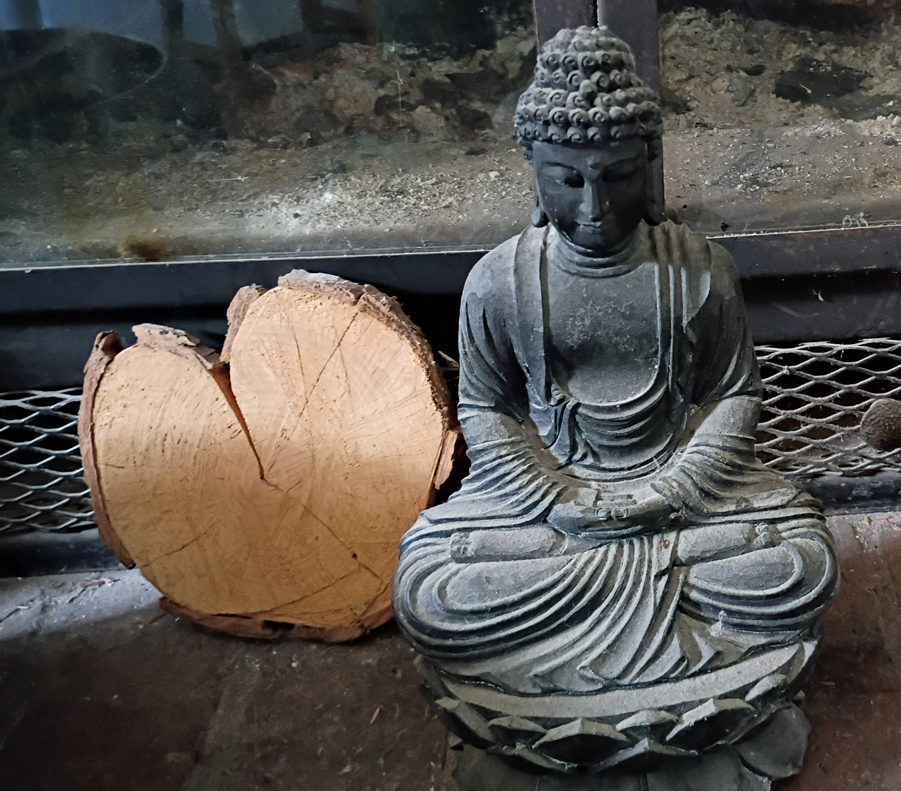
After many years in the wilderness, figuratively speaking, I wanted a deeper context and meaning in my life. I started meditating and exploring different ways to mediate. Eventually I wandered into Buddhism, explored the different varieties, and settled on Vipassana, derived from Thai Forest Theravada tradition. Zen seemed too inscrutable and too clever by half, and Tibetan Buddhism had what seems to me like a vast array of saints that I could’ve stayed Catholic and gotten. I seldom go to an actual meditation hall, but when I do it’s the Portland Insight Meditation Center. Obscure doctrinal differences aside, the most import thing to me that they all share is the Noble Eightfold Path. I think of it as the Buddhist version of the Ten Commandments.
The Noble Eightfold Path “consists of eight practices: right view, right resolve, right speech, right conduct, right livelihood, right effort, right mindfulness, and right samadhi (‘meditative absorption or union’; alternatively, equanimous meditative awareness).” The practice I think of most often in a political context is right speech: Is what I want to say true? Is it helpful? Is it necessary? It’s one thing if you and I are sitting in your home or mine, just chatting – important but relatively straightforward. It’s much more complicated if I’m in a public space like this not thinking just about you but everyone who might read this.
My favorite Buddhist exercise is to, when I am feeling stressed or unhappy, imagine that I am the only unenlightened being in the situation. Everyone else is a Bodhisattva, an enlightened being who is delaying their journey to Nirvana to help unenlightened beings like me learn what I need to become enlightened. I often think, what is DJT here to teach me, to teach us? That’s a story for another page though